
Why Emotional Safety Matters More Than Academic Pressure in a Child’s Learning Journey
For many parents today, education is no longer just about grades and rankings. It’s about how their child feels while learning. Concerns such as exam anxiety, fear of making mistakes, and loss of confidence are becoming increasingly common - especially among families exploring ICSE schools in Hyderabad.
While academic performance remains important, research and real classroom experiences show that children learn best when they feel emotionally safe. Emotional safety allows students to engage, question, and grow without fear. Without it, even capable learners can struggle to perform to their potential.
At Johnson Grammar School, L.B. Nagar, emotional wellbeing is considered a foundation for meaningful learning. The ICSE curriculum is implemented in a way that supports both academic depth and emotional balance, ensuring students grow with confidence rather than pressure.
What Emotional Safety Really Means in a Classroom
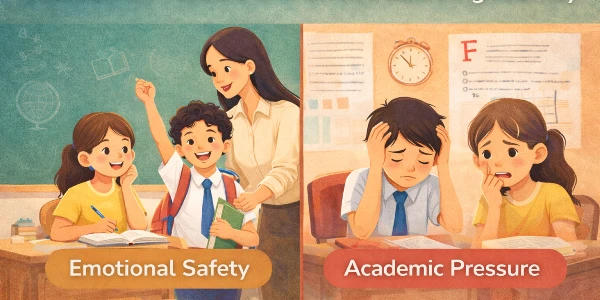
Emotional safety means that a child feels secure enough to express ideas, ask questions, and make mistakes without fear of ridicule or punishment. When students know they are respected and supported, they become more willing to participate and take intellectual risks.
In emotionally safe environments, learning becomes collaborative rather than competitive. Students focus on understanding concepts instead of worrying about comparison or judgment. This shift plays a crucial role in long-term academic and personal development.
When Academic Pressure Takes Over
Excessive academic pressure often shows up quietly. Children may hesitate to speak in class, fear assessments, or lose interest in learning altogether. Over time, pressure-driven environments can affect not just performance but also self-esteem and emotional health.
Parents often notice signs such as stress before exams, difficulty concentrating, or emotional withdrawal. These are not signs of low ability — they are indicators that a child needs a more balanced learning environment.
Why Emotional Safety Improves Learning Outcomes
Contrary to popular belief, reducing pressure does not reduce standards. In fact, emotionally secure students often perform better academically. When stress levels are managed, the brain becomes more receptive to learning, problem-solving, and memory retention.
Children who feel safe are more likely to ask questions, seek clarification, and persist through challenges. This leads to deeper understanding and more consistent academic performance — something parents actively look for while choosing the best ICSE schools in Hyderabad.
How ICSE Education Naturally Supports Emotional Wellbeing
The ICSE curriculum encourages conceptual clarity, language development, and reflective learning. This approach reduces the need for rote memorisation and creates space for students to think independently.
At Johnson Grammar School, Hyderabad, this structure allows teachers to focus on comprehension rather than speed. Students are guided to understand why something works, not just what the answer is. This sense of control over learning directly strengthens confidence and emotional stability.
Classroom Practices That Build Emotional Safety
In everyday learning, emotional safety is reinforced through simple but intentional practices such as:
Clear classroom routines that reduce uncertainty
Encouragement that focuses on effort and improvement
Open discussions where students feel heard
Constructive feedback instead of fear-based correction
These practices help students feel secure, respected, and motivated to engage fully in the learning process.
The Role of Teachers in Creating a Safe Learning Environment
Teachers are central to a child’s emotional experience at school. Beyond subject knowledge, their ability to recognize emotional needs and respond thoughtfully makes a lasting difference.
At JGS, teachers support students by guiding reflection, encouraging resilience, and helping them view mistakes as part of learning. This builds trust, which allows students to grow academically without fear.
What Parents Often Observe Over Time
When children learn in emotionally supportive environments, parents often notice positive changes beyond academics. Children communicate more openly, manage stress better, and approach learning with greater independence.
For families in L.B. Nagar and surrounding areas, this balance between emotional safety and academic strength is becoming a key factor in school selection.
Preparing for the Years Ahead
As parents begin thinking about the 2026 academic year, many are re-evaluating what truly supports long-term success. Strong academics matter, but they are most effective when built on emotional confidence and stability.
Schools that prioritize emotional safety prepare students not only for exams, but for future challenges in higher education and life.
Emotional safety is not a distraction from academic excellence — it is what sustains it.
By combining the strengths of the ICSE curriculum with a student-centred approach, Johnson Grammar School, L.B. Nagar creates learning environments where children feel secure, confident, and motivated. When students feel safe, learning becomes meaningful — and success follows naturally.